Open to Public
Weill Cornell Medical College
Fri, Dec 07.2012
About the plays
-
Women of Trachis by Sophocles
Sophocles’ Women of Trachis, tells the story of Heracles—the strongest of all Greek heroes—who has been unintentionally poisoned by his wife, Deineira, after she discovers that he has fallen in love with a younger woman. In an attempt to win back her husband’s affection mistakes a lethal toxin, which was given to her by a dying centaur years ago for a love potion. Deineira sends him a robe dipped in the liquid. When Heracles puts on the robe it immediately eats through his skin, muscle tissue, down through his bones to the marrow. Heracles falls to the ground, clutching his sides, crying out in pain, calling for his teenage son, Hyllus, to come to his aid and to help him put an end to the seemingly endless waves of pain.
-
Philoctetes by Sophocles
Sophocles’ Philoctetes tells the story of decorated warrior who is abandoned on a deserted island because of mysterious chronic illness that he contracts on the way to the Trojan War. Nine years later, the Greeks learn from an oracle that in order to win the war they must rescue him from the island. When they finally come for him, the wounded warrior must overcome nine long years of festering resentment and shame in order to accept help from the very men who betrayed him.
Explore Projects
-
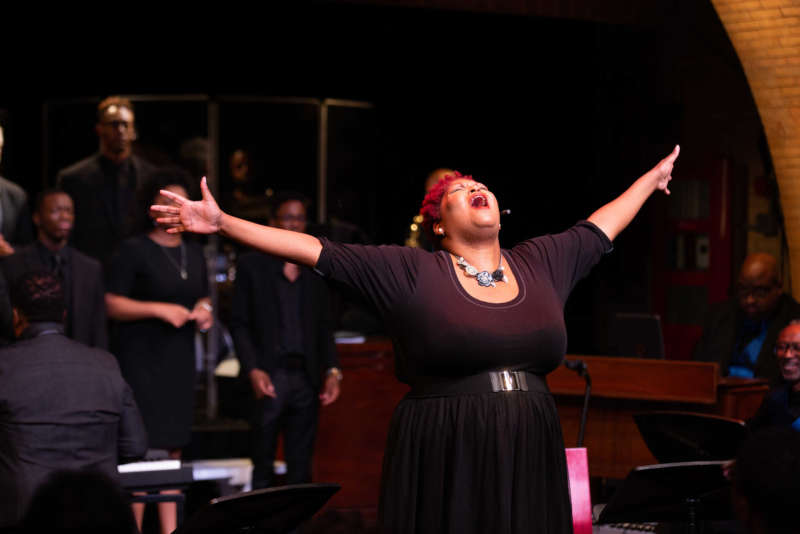 Racialized Police ViolenceAntigone in Ferguson
Antigone in Ferguson is a groundbreaking project that fuses dramatic readings by acclaimed actors of Sophocles’ Antigone with live choral music performed by a diverse choir, including activists, youth, teachers, police officers, and concerned citizens from St. Louis, Missouri and New York City, culminating in powerful, healing discussions about racialized violence, police brutality, systemic oppression, gender-based violence, health inequality, and social justice. Antigone in Ferguson was conceived in the wake of Michael Brown’s death in 2014, through a collaboration between Theater of War Productions and community members from Ferguson, MO, and premiered at Normandy High School, Michael Brown’s alma mater, in September of 2016.
-
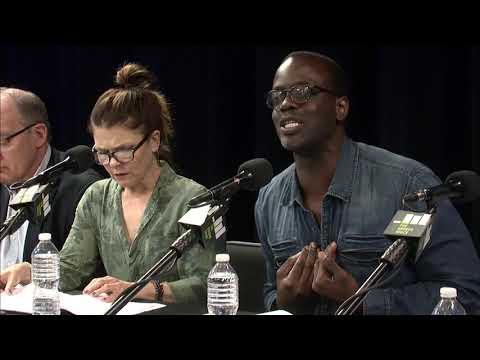 IncarcerationPrometheus in Prison
Prometheus in Prison is an innovative public health project that presents readings of Aeschylus’ Prometheus Bound, an ancient Greek play about god who is imprisoned for stealing fire and giving it to humans, as a catalyst for powerful discussions about the challenges faced by individuals, families, and communities whose lives have been touched by the criminal justice system. For the past decade years, this groundbreaking project has been used to open up healing dialogue in a variety of settings, including prisons, detention centers, and public venues throughout the country and the world.
-
 Pandemic & Climate CrisisPoetry for the Pandemic
Using poetry as a catalyst for an Intergenerational performance and discussion during the Covid-19 pandemic.