Invitation Only
TAPE / Camp As-Saliyah
This event has ended.
View upcoming events.
Thu, Aug 07.2014
About the play
-
Tape by Stephen Belber
Two best friends from high school—Jon and Vince—reunite ten years later at a motel in Michigan. Over the course of an evening, Vince pressures Jon to admit that he date-raped Amy Randall, a girl they both dated in high school, only then to reveal that he has recorded their entire conversation. Vince then uses the tape to force Jon to personally apologize to Amy that evening, after inviting her to join them for dinner. Differing memories of the event collide, and the complexities and social pressures of the relationships are revisited, in a final confrontation in which Jon, Amy, and Vince argue over the truth of what happened that night.
Explore Projects
-
 Ethics & The Justice SystemTheater of Law
Developed with New York University’s Forum on Law, Culture, & Society, and designed as a professional development program for legal professionals, as well as for the general public, Theater of Law drives conversations about moral justice in the court system. The project is aimed at engaging audiences who have in some way been disenfranchised by the law in constructive, powerful dialogue.
-
 Caregiving & DeathEnd of Life
End of Life presents readings of ancient Greek plays in public settings and medical communities as a catalyst for facilitated discussions about challenges faced by patients, families, and health professionals today around end of life care. This unique, participatory event is intended to promote powerful, open discussion among diverse communities - public and professional - fostering compassion, cooperation, and understanding about living with chronic suffering and the mortality we all share.
-
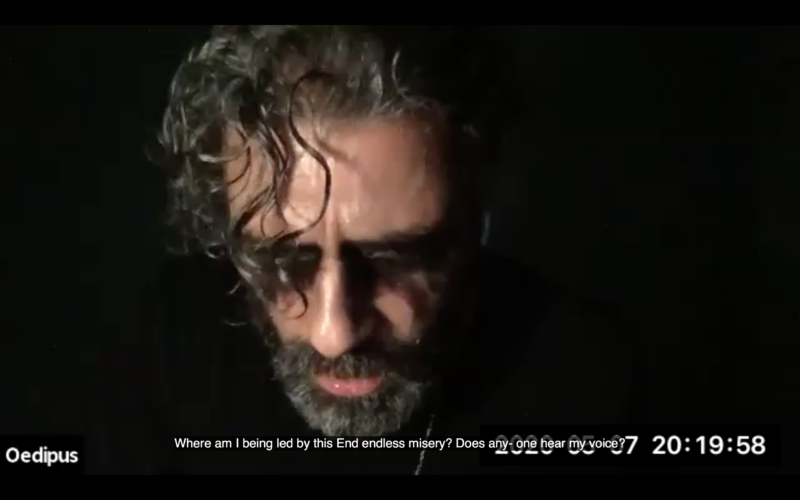 Pandemic & Climate CrisisThe Oedipus Project
The Oedipus Project presents acclaimed actors reading scenes from Sophocles’ Oedipus the King as a catalyst for powerful, constructive, global discussions about the climate crisis, ecological disaster, ethical leadership, and environmental justice. Sophocles’ ancient play, first performed in 429 BC, just after the first wave of a plague that killed nearly one-third of the Athenian population, is a story of arrogant leadership, ignored prophecy, intergenerational curses, and a pestilence and ecological collapse that ravages the archaic city of Thebes. Seen through this lens, Oedipus the King appears to have been a powerful tool for helping Athenians communalize trauma and loss, while interrogating their own complicit role in the suffering, not just of those around them but of generations to come.