Open to Public
Theater of Law
Translated and Directed by Bryan Doerries
A Collaboration with The Forum on Law, Culture, & Society at NYU School of Law
About the play
-
Eumenides by Aeschylus
Aeschylus’ Eumenides dramatizes the trial of Orestes, a young man who is tormented by the avenging Furies after killing his mother Clytemnestra in retaliation for his father Agamemnon’s death. Orestes seeks refuge in the temple of Apollo, who brings him to Athens and defends him before a jury of twelve Athenians. The goddess Athena hears arguments from both sides, including the forceful prosecution of the Furies, who maintain that the social order of the city will unravel if the matricide goes unpunished. Ultimately, after the jury is hung, Athena casts the deciding vote, acquitting Orestes of his crime and, after doing so, she must also find a way to appease the avenging Furies, so that their violent and destructive anger is not unleashed upon the city.
Explore Projects
-
 Consent & Sexual ViolenceTape
Tape has been developed as a sexual assault awareness and prevention training program that uses dramatic readings of Stephen Belber’s 1999 play to ignite powerful discussions about consent, sexual assault, rape, and power dynamics.
-
 Domestic ViolencePatient and Impatient Griselda
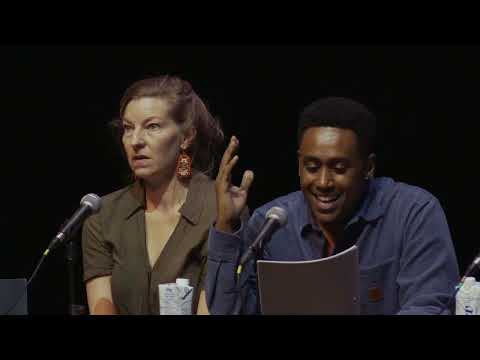
Theater of War Productions and Margaret Atwood return to the Toronto International Festival of Authors with an exciting new collaboration exploring power and control, domestic violence, and family dynamics by way of two versions of the same story, one written by Giovanni Boccaccio in 1348 during the bubonic plague and the other by Atwood in 2020 during the Covid-19 pandemic. In Bocaccio’s version, a woman named Griselda remains in an abusive and controlling relationship, showing great patience and forbearance in the face of her husband’s sadism and cruelty. In Atwood’s version, Griselda takes matters in her own hands and, with the help of her sister, turns the tables on her husband.
This free, public event featured a live, dramatic reading of the “Patient Griselda” story from Boccaccio's Decameron by Jesse Eisenberg (The Social Network, Fleishman is in Trouble), Maev Beaty (Beau is Afraid, Mouthpiece), and Araya Mengesha (Tiny Pretty Things, Nobody). Then, in response, Margaret Atwood performed “Impatient Grisleda,” a story that is narrated to a group of humans in quarantine by an alien that looks like an octopus. The readings of both texts was followed by immediate responses by community panelists and culminated in a guided audience discussion, facilitated by Bryan Doerries (Artistic Director, Theater of War Productions).
Co-presented by Theater of War Productions and Toronto International Festival of Authors.
This hybrid presentation took place in person at the Toronto Harbourfront Centre Theatre and on Zoom Webinar on September 30, 2023.
-
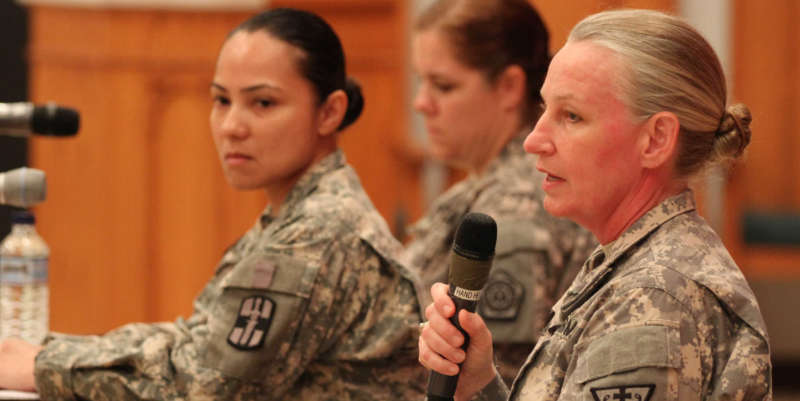
 War & Mental HealthTheater of War
Rooted in discussions about the invisible and visible wounds of war, the company’s hallmark project is designed to increase awareness of psychological health issues, disseminate information on available resources, and foster greater community cohesion.