Open to Public
Harvard Medical School
Thu, Jun 17.2010
About the plays
-
Women of Trachis by Sophocles
Sophocles’ Women of Trachis, tells the story of Heracles—the strongest of all Greek heroes—who has been unintentionally poisoned by his wife, Deineira, after she discovers that he has fallen in love with a younger woman. In an attempt to win back her husband’s affection mistakes a lethal toxin, which was given to her by a dying centaur years ago for a love potion. Deineira sends him a robe dipped in the liquid. When Heracles puts on the robe it immediately eats through his skin, muscle tissue, down through his bones to the marrow. Heracles falls to the ground, clutching his sides, crying out in pain, calling for his teenage son, Hyllus, to come to his aid and to help him put an end to the seemingly endless waves of pain.
-
Philoctetes by Sophocles
Sophocles’ Philoctetes tells the story of decorated warrior who is abandoned on a deserted island because of mysterious chronic illness that he contracts on the way to the Trojan War. Nine years later, the Greeks learn from an oracle that in order to win the war they must rescue him from the island. When they finally come for him, the wounded warrior must overcome nine long years of festering resentment and shame in order to accept help from the very men who betrayed him.
Explore Projects
-
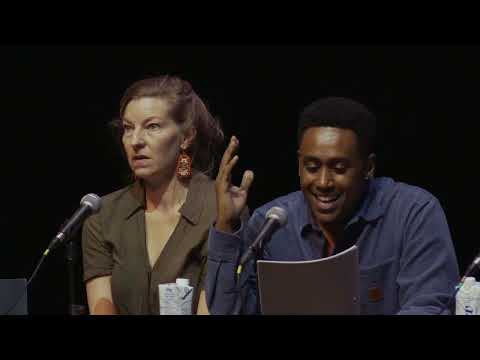 Domestic ViolencePatient and Impatient Griselda
Theater of War Productions and Margaret Atwood return to the Toronto International Festival of Authors with an exciting new collaboration exploring power and control, domestic violence, and family dynamics by way of two versions of the same story, one written by Giovanni Boccaccio in 1348 during the bubonic plague and the other by Atwood in 2020 during the Covid-19 pandemic. In Bocaccio’s version, a woman named Griselda remains in an abusive and controlling relationship, showing great patience and forbearance in the face of her husband’s sadism and cruelty. In Atwood’s version, Griselda takes matters in her own hands and, with the help of her sister, turns the tables on her husband.
This free, public event featured a live, dramatic reading of the “Patient Griselda” story from Boccaccio's Decameron by Jesse Eisenberg (The Social Network, Fleishman is in Trouble), Maev Beaty (Beau is Afraid, Mouthpiece), and Araya Mengesha (Tiny Pretty Things, Nobody). Then, in response, Margaret Atwood performed “Impatient Grisleda,” a story that is narrated to a group of humans in quarantine by an alien that looks like an octopus. The readings of both texts was followed by immediate responses by community panelists and culminated in a guided audience discussion, facilitated by Bryan Doerries (Artistic Director, Theater of War Productions).
Co-presented by Theater of War Productions and Toronto International Festival of Authors.
This hybrid presentation took place in person at the Toronto Harbourfront Centre Theatre and on Zoom Webinar on September 30, 2023.
-
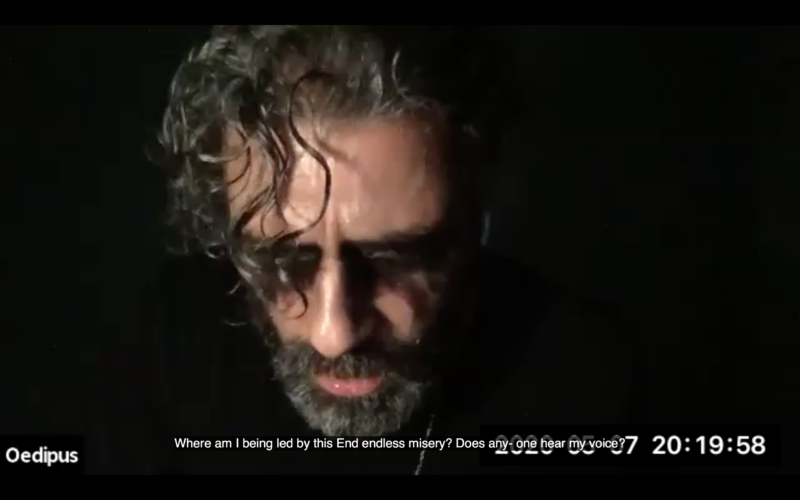 Pandemic & Climate CrisisThe Oedipus Project
The Oedipus Project presents acclaimed actors reading scenes from Sophocles’ Oedipus the King as a catalyst for powerful, constructive, global discussions about the climate crisis, ecological disaster, ethical leadership, and environmental justice. Sophocles’ ancient play, first performed in 429 BC, just after the first wave of a plague that killed nearly one-third of the Athenian population, is a story of arrogant leadership, ignored prophecy, intergenerational curses, and a pestilence and ecological collapse that ravages the archaic city of Thebes. Seen through this lens, Oedipus the King appears to have been a powerful tool for helping Athenians communalize trauma and loss, while interrogating their own complicit role in the suffering, not just of those around them but of generations to come.
-
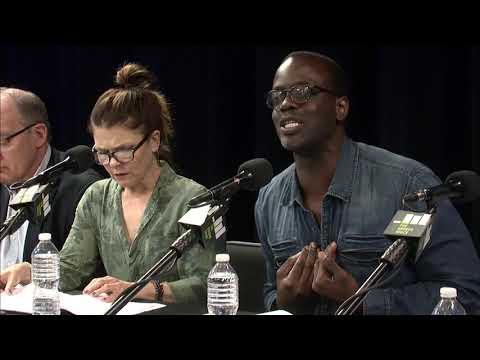 IncarcerationPrometheus in Prison
Prometheus in Prison is an innovative public health project that presents readings of Aeschylus’ Prometheus Bound, an ancient Greek play about god who is imprisoned for stealing fire and giving it to humans, as a catalyst for powerful discussions about the challenges faced by individuals, families, and communities whose lives have been touched by the criminal justice system. For the past decade years, this groundbreaking project has been used to open up healing dialogue in a variety of settings, including prisons, detention centers, and public venues throughout the country and the world.