Open to Public
Guantanamo Bay
Fri, Jun 24.2011
About the play
-
Prometheus Bound by Aeschylus
Aeschylus’ Prometheus Bound is a play about a god who is imprisoned for stealing fire from the gods and giving it to humans. The incarcerated Prometheus admits that he willfully committed a crime and is sentenced for his actions. He is placed in extreme isolation at the end of the earth for the rest of time. Over the course of the play, Prometheus is visited by a number of characters, including friends and family. Each of these characters attempts to impart advice upon Prometheus about how he can lessen his sentence and increase his chances of being released. Increasingly enraged by each exchange, Prometheus, over the course of the play, shuts down, refusing to accept help or advice from anyone, and spends the final moments of the play shaking his fist at the sky, willfully provoking a far worse punishment than isolation.
Explore Projects
-
 War & Mental HealthThe Tecmessa Project
The Tecmessa Project presents readings of Sophocles’s Ajax, an ancient play about the visible and invisible wounds of war, as the catalyst for discussions focusing on the unique challenges faced by military family members, including couples, children, caregivers, and communities. This project is designed to promote understanding, compassion, and positive action.
-
 Caregiving & DeathKing Lear Project
The King Lear Project presents streamlined readings of scenes from Shakespeare’s King Lear to engage diverse audiences—including older adults, caregivers, and family members—in open, healing, constructive, discussions about the challenges of aging, dementia, and caring for friends and loved ones.
-
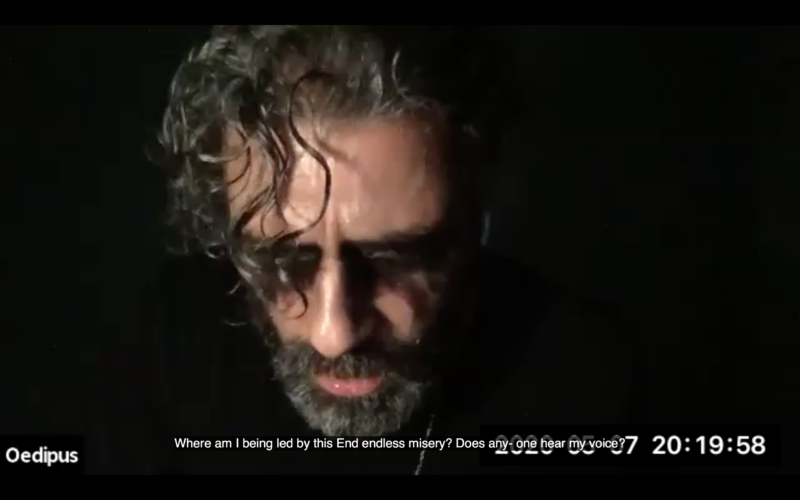 Pandemic & Climate CrisisThe Oedipus Project
The Oedipus Project presents acclaimed actors reading scenes from Sophocles’ Oedipus the King as a catalyst for powerful, constructive, global discussions about the climate crisis, ecological disaster, ethical leadership, and environmental justice. Sophocles’ ancient play, first performed in 429 BC, just after the first wave of a plague that killed nearly one-third of the Athenian population, is a story of arrogant leadership, ignored prophecy, intergenerational curses, and a pestilence and ecological collapse that ravages the archaic city of Thebes. Seen through this lens, Oedipus the King appears to have been a powerful tool for helping Athenians communalize trauma and loss, while interrogating their own complicit role in the suffering, not just of those around them but of generations to come.