Open to Public
A REFUTATION - West Baltimore
Free Event
A REFUTATION presents dramatic readings by acclaimed actors of excerpts from two conflicting historic accounts of Philadelphia’s 1793 yellow fever epidemic as a catalyst for guided audience discussions about health inequities in America today, grounded in the perspectives of nurses, caregivers, and first responders.
Featuring pamphlets, letters, and rebuttals by Absalom Jones, Richard Allen, Matthew Carey, and Benjamin Rush, performed by Chad Coleman (The Wire, The Orville, The Walking Dead), Seth Gilliam (The Wire, The Walking Dead, Oz), Bill Camp (Presumed Innocent, 12 Years a Slave, The Queen’s Gambit), and Peter Marks (former Chief Theater Critic of the Washington Post).
A REFUTATION was developed with generous support from The Greenwall Foundation in celebration of its 75th anniversary.
Presented by Theater of War Productions, Union Memorial United Methodist Church, Ebenezer United Methodist Church - Capitol Hill, and the Johns Hopkins Center for Medical Humanities and Social Medicine.
Directed, adapted, and facilitated by Bryan Doerries.
This free, public, live, hybrid event will take place on Zoom Webinar, broadcast from Union Memorial United Methodist Church. In person registration does not guarantee you a seat. Please arrive by 7:30pm. If you choose to join us online, this event can be accessed on personal devices. The event Zoom link will be distributed via email and available to registered attendees starting two days prior to the event. This event will be Captioned in English on Zoom.
All of Theater of War Productions' events follow the same format:
- The performers will read the texts.
- Community panelists will kick off the discussion with their gut responses to what resonated with them across time.
- We will open the discussion to the audience, facilitated by Bryan Doerries. To participate in the discussion online, please raise your hand using the button at the bottom center of the screen. If called upon, please accept the invitation to be promoted to speak and you will be visible and heard by the entire audience for the duration of your comments. If you would prefer not to be seen, please disable your video.
About the plays
-
A Narrative of the Proceedings of the Black People, During the Late Awful Calamity in Philadelphia, in the Year 1793, and A REFUTATION of Some Censures, Thrown upon Them in Some Late Publications by Absalom Jones (1746 – 1818) and Richard Allen (1760 – 1831)
A Narrative of the Proceedings of the Black People, During the Late Awful Calamity in Philadelphia, in the Year 1793, and A REFUTATION of Some Censures, Thrown upon Them in Some Late Publications, by Absalom Jones (1746 – 1818) and Richard Allen (1760 – 1831), highly distinguished civic and religious leaders from Philadelphia’s free Black community, was the first publication by Black authors to receive a federal copyright in the United States. Both men were born into slavery, purchased their freedom, and rose to become the important leaders in the nation’s largest free Black community. Jones was the nation’s first Black Episcopal priest, and Allen founded Bethel Church, the oldest African Methodist Episcopal congregation in the nation. Their pamphlet is the only depiction of the 1793 yellow fever epidemic that foregrounds the perspectives and experiences of Black people and the first known text to express Black community anger and directly challenge accusations and libelous statements by a white author. It had a print run of 250-500 copies.
-
A Short Account of the Malignant Fever, Lately Prevalent in Philadelphia, With a Statement of the Proceedings That Took Place on the Subject in Different Parts of the United States by Matthew Carey (1760 -1839)
A Short Account of the Malignant Fever, Lately Prevalent in Philadelphia, With a Statement of the Proceedings That Took Place on the Subject in Different Parts of the United States, by Matthew Carey (1760 -1839), an Irish immigrant and the nation’s most preeminent publisher at the time, was a runaway success. Roughly 10,000 copies of the pamphlet were sold in four editions over the span of two months. The pamphlet made distorted, racist claims about Black nurses, care givers, and first responders during the height of the epidemic, prompting Absalom Jones and Richard Allen to publish a rebuttal seven weeks after its first print run.
Cast Members
-

Seth Gilliam
-

Bill Camp
-

Chad Coleman
-

Peter Marks
Event Partners


Explore Projects
-
 Refugees & ImmigrationThe Suppliants Project
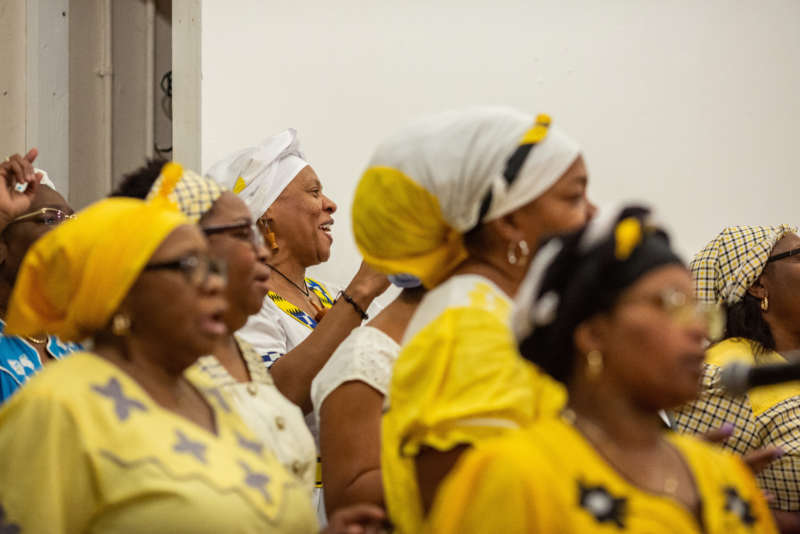
The Suppliants Project tells the timeless story of fifty female refugees seeking asylum at a border from forced marriage and domestic violence. The play not only depicts the struggle of these women to cross into safety, but also the internal struggle within the city that ultimately receives them. Using a 2,500-year-old tragedy by Aeschylus as a catalyst for powerful gatherings and crucial conversations, The Suppliants Project engages diverse audiences in humanizing, constructive dialogue about the challenges and impact of war, migration, and seeking asylum.
-
 Ethics & The Justice SystemTheater of Law
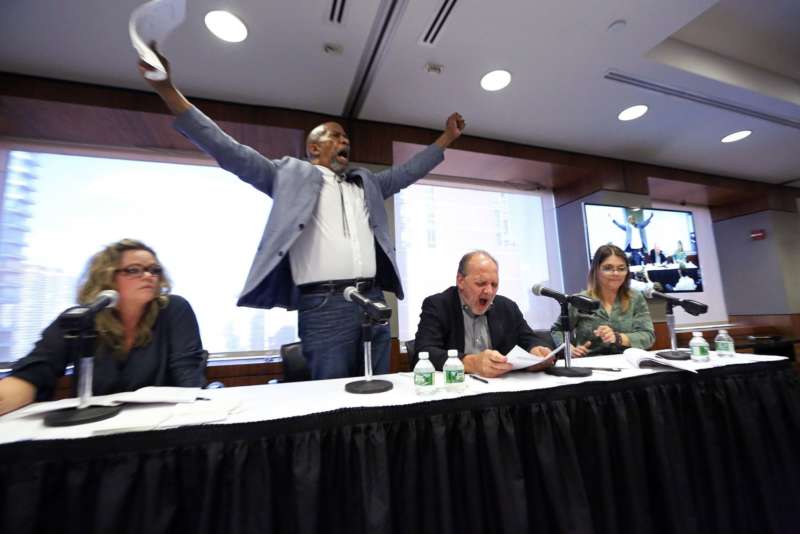
Developed with New York University’s Forum on Law, Culture, & Society, and designed as a professional development program for legal professionals, as well as for the general public, Theater of Law drives conversations about moral justice in the court system. The project is aimed at engaging audiences who have in some way been disenfranchised by the law in constructive, powerful dialogue.
-
 Natural DisasterBook of Job
The Book of Job Project presents dramatic readings by acclaimed actors of The Book of Job as a catalyst for powerful, guided conversations about the impact of natural and manmade disasters upon individuals, families, and communities.