Invitation Only / New York City Public Artist In Residence
Prometheus in Prison at Rikers
This event has ended.
View upcoming events.
Wed, Oct 24.2018
About the play
-
Prometheus Bound by Aeschylus
Aeschylus’ Prometheus Bound is a play about a god who is imprisoned for stealing fire from the gods and giving it to humans. The incarcerated Prometheus admits that he willfully committed a crime and is sentenced for his actions. He is placed in extreme isolation at the end of the earth for the rest of time. Over the course of the play, Prometheus is visited by a number of characters, including friends and family. Each of these characters attempts to impart advice upon Prometheus about how he can lessen his sentence and increase his chances of being released. Increasingly enraged by each exchange, Prometheus, over the course of the play, shuts down, refusing to accept help or advice from anyone, and spends the final moments of the play shaking his fist at the sky, willfully provoking a far worse punishment than isolation.
Cast Members
-

John Doman
-

Kathryn Erbe
-

Obi Abili
Event Partners

Explore Projects
-
 Pandemic & Climate CrisisPoetry for the Pandemic
Using poetry as a catalyst for an Intergenerational performance and discussion during the Covid-19 pandemic.
-
 Racialized Police ViolenceAntigone in Ferguson
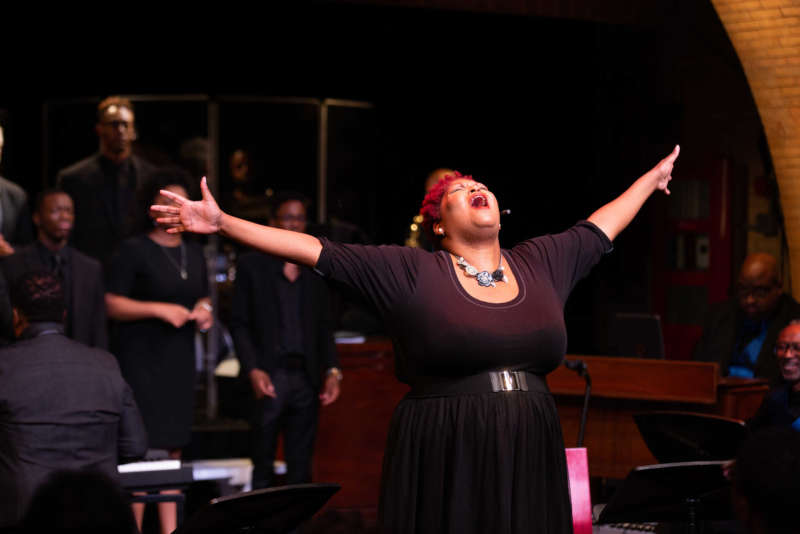
Antigone in Ferguson is a groundbreaking project that fuses dramatic readings by acclaimed actors of Sophocles’ Antigone with live choral music performed by a diverse choir, including activists, youth, teachers, police officers, and concerned citizens from St. Louis, Missouri and New York City, culminating in powerful, healing discussions about racialized violence, police brutality, systemic oppression, gender-based violence, health inequality, and social justice. Antigone in Ferguson was conceived in the wake of Michael Brown’s death in 2014, through a collaboration between Theater of War Productions and community members from Ferguson, MO, and premiered at Normandy High School, Michael Brown’s alma mater, in September of 2016.
-
 IncarcerationPrometheus in Prison
Prometheus in Prison is an innovative public health project that presents readings of Aeschylus’ Prometheus Bound, an ancient Greek play about god who is imprisoned for stealing fire and giving it to humans, as a catalyst for powerful discussions about the challenges faced by individuals, families, and communities whose lives have been touched by the criminal justice system. For the past decade years, this groundbreaking project has been used to open up healing dialogue in a variety of settings, including prisons, detention centers, and public venues throughout the country and the world.