Open to Public
National Council for Community Behavioral Healthcare
Tue, Apr 09.2013
About the play
-
Prometheus Bound by Aeschylus
Aeschylus’ Prometheus Bound is a play about a god who is imprisoned for stealing fire from the gods and giving it to humans. The incarcerated Prometheus admits that he willfully committed a crime and is sentenced for his actions. He is placed in extreme isolation at the end of the earth for the rest of time. Over the course of the play, Prometheus is visited by a number of characters, including friends and family. Each of these characters attempts to impart advice upon Prometheus about how he can lessen his sentence and increase his chances of being released. Increasingly enraged by each exchange, Prometheus, over the course of the play, shuts down, refusing to accept help or advice from anyone, and spends the final moments of the play shaking his fist at the sky, willfully provoking a far worse punishment than isolation.
Explore Projects
-
 Domestic ViolencePatient and Impatient Griselda
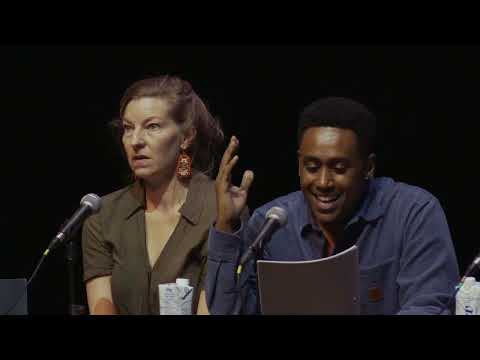
Theater of War Productions and Margaret Atwood return to the Toronto International Festival of Authors with an exciting new collaboration exploring power and control, domestic violence, and family dynamics by way of two versions of the same story, one written by Giovanni Boccaccio in 1348 during the bubonic plague and the other by Atwood in 2020 during the Covid-19 pandemic. In Bocaccio’s version, a woman named Griselda remains in an abusive and controlling relationship, showing great patience and forbearance in the face of her husband’s sadism and cruelty. In Atwood’s version, Griselda takes matters in her own hands and, with the help of her sister, turns the tables on her husband.
This free, public event featured a live, dramatic reading of the “Patient Griselda” story from Boccaccio's Decameron by Jesse Eisenberg (The Social Network, Fleishman is in Trouble), Maev Beaty (Beau is Afraid, Mouthpiece), and Araya Mengesha (Tiny Pretty Things, Nobody). Then, in response, Margaret Atwood performed “Impatient Grisleda,” a story that is narrated to a group of humans in quarantine by an alien that looks like an octopus. The readings of both texts was followed by immediate responses by community panelists and culminated in a guided audience discussion, facilitated by Bryan Doerries (Artistic Director, Theater of War Productions).
Co-presented by Theater of War Productions and Toronto International Festival of Authors.
This hybrid presentation took place in person at the Toronto Harbourfront Centre Theatre and on Zoom Webinar on September 30, 2023.
-
 Addiction & Substance AbuseRum and Vodka
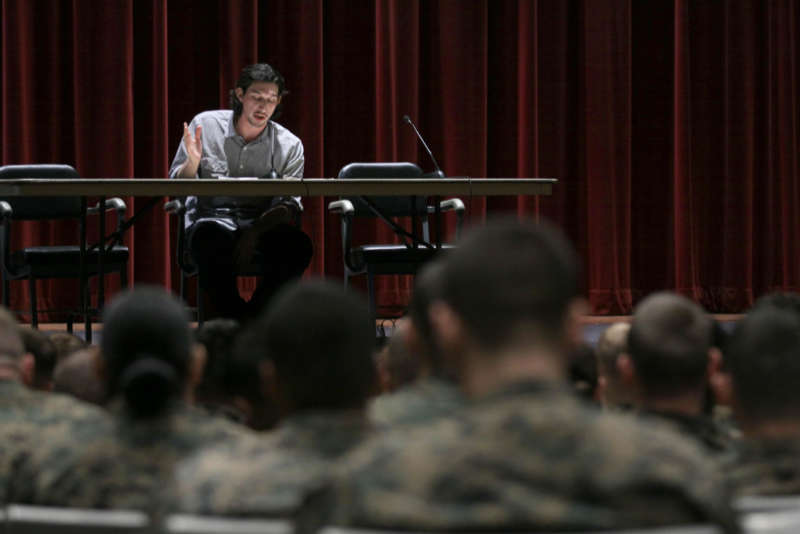
This project presents a one-man Irish play about a 24-year-old whose life is coming apart, due to drinking, in order to provoke discussions about alcoholism and addiction within diverse communities.
-
 War & Mental HealthThe Tecmessa Project
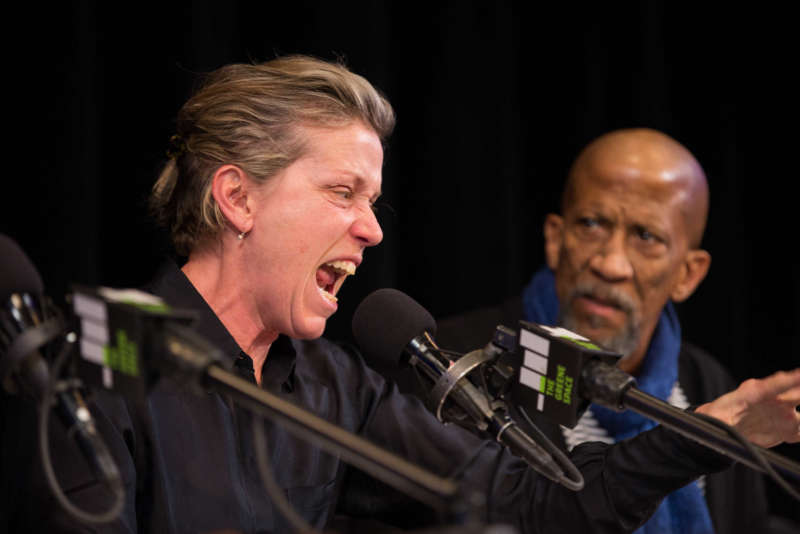
The Tecmessa Project presents readings of Sophocles’s Ajax, an ancient play about the visible and invisible wounds of war, as the catalyst for discussions focusing on the unique challenges faced by military family members, including couples, children, caregivers, and communities. This project is designed to promote understanding, compassion, and positive action.