Open to Public / New York City Public Artist In Residence
Hercules in Rikers
Sat, May 19.2018
About the play
-
Madness of Hercules by Euripides
When the Greek hero Hercules returns to Thebes and finds his home occupied by a local tyrant, he goes on a rampage with his invincible bow, killing the men who have invaded his house and taken his family hostage. But in the heat of the battle, Hercules enters into a berserk rage and kills everyone in sight, including his wife and two young children, with his powerful weapon, mistaking them for enemies. When he comes back to his senses and takes in the horror of what he has done, Hercules contemplates suicide, but his close friend and fellow war veteran Theseus, stays by his side and offers unconditional support, encouraging him to share the burden of what he has done with his community. At its core, Euripides’ Madness of Hercules asks profound questions about how we should respond to unthinkable violence—as citizens, family members, friends, and neighbors—and how we can all work together to stop violence from occurring in our communities, before it’s too late.
Cast Members
-

Michael K. Williams
-

Kathryn Erbe
-

Peter Francis James
-

Ato Essandoh
Explore Projects
-
 Ethics & The Justice SystemTheater of Law
Developed with New York University’s Forum on Law, Culture, & Society, and designed as a professional development program for legal professionals, as well as for the general public, Theater of Law drives conversations about moral justice in the court system. The project is aimed at engaging audiences who have in some way been disenfranchised by the law in constructive, powerful dialogue.
-
 RacismAntigone in Savannah
Dramatic readings of Sophocles’ Antigone with live music to frame powerful dialogue about honoring the dead and healing historical wounds.
-
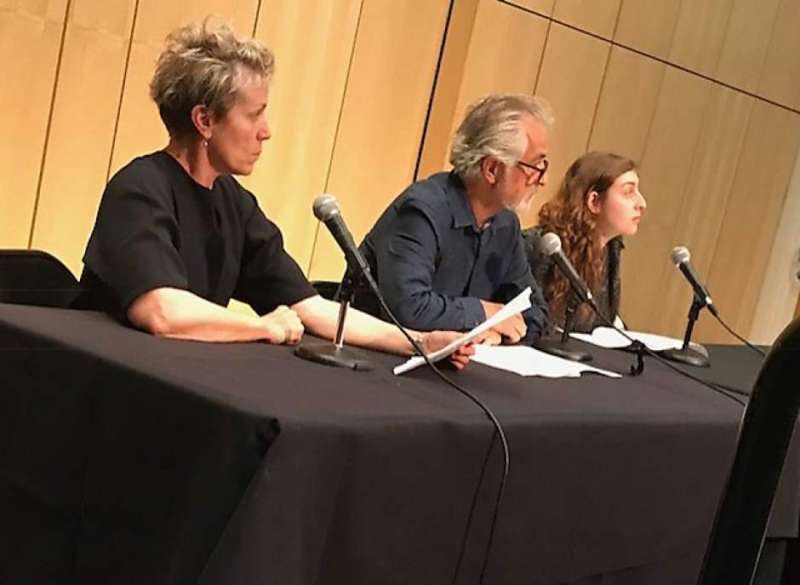 Caregiving & DeathTheater of War Frontline
Theater of War Frontline is an innovative project—developed by Theater of War Productions, the Johns Hopkins Berman Institute of Bioethics and the Johns Hopkins Program in Arts, Humanities & Health—that presents dramatic readings by acclaimed actors of scenes from ancient Greek plays for audiences of frontline medical professionals to open up powerful dialogue about difficult subjects, fostering a sense of connection and promoting health-seeking behavior. By presenting ancient plays to doctors, nurses, EMTs, respiratory therapists, and the frontline community about emotionally-charged, ethically complex situations, Theater of War Frontline aims to create a brave space for open, candid dialogue and reflection, fostering compassion, a renewed sense of community, and positive action.