Open to Public
Association of American Medical Colleges Annual Meeting
Free Event
Sun, Nov 06.2011
About the play
-
Long Day's Journey Into Night by Eugene O'neill
Eugene O'Neill's Long Day's Journey into Night depicts the struggles of Mary Tyrone, a woman who abuses prescription painkillers and relapses into full-blown morphine addiction. It is also the story of how Mary's addiction rips her family apart, as her morphine use slowly becomes apparent to her husband and two sons, who struggle with alcohol abuse and addiction. It is widely believed that Long Day's Journey into Night is an autobiographical play, and that the troubled characters in it are based on members of O'Neill's own family, including his mother, Ella, who struggled with morphine addiction for most of her life. In his dedication of the play to his wife Carlotta, O'Neill states that it is a "play of old sorrow, written in tears and blood," and that he wrote it "with deep pity and understanding and forgiveness for all the four haunted Tyrones." O'Neill wrote the play for personal reasons, and the Addiction Performance Project present the plays to diverse audiences to elicit personal responses and candid discussion about addiction.
Explore Projects
-
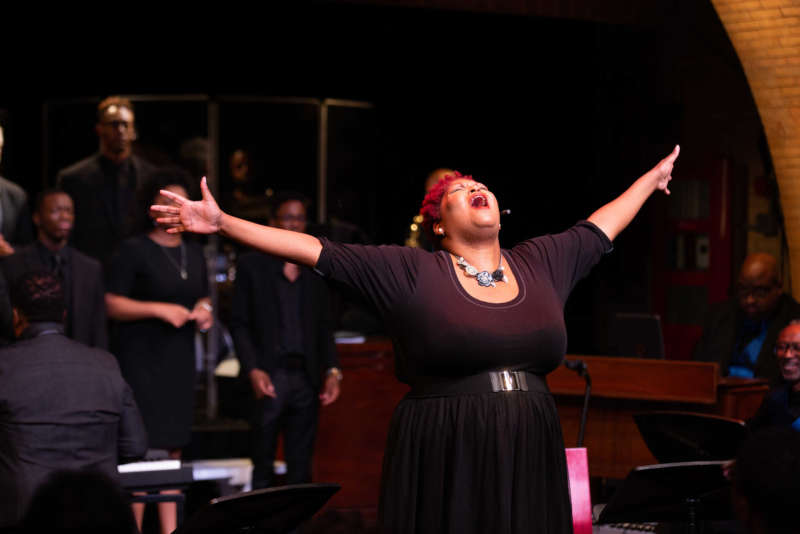 Racialized Police ViolenceAntigone in Ferguson
Antigone in Ferguson is a groundbreaking project that fuses dramatic readings by acclaimed actors of Sophocles’ Antigone with live choral music performed by a diverse choir, including activists, youth, teachers, police officers, and concerned citizens from St. Louis, Missouri and New York City, culminating in powerful, healing discussions about racialized violence, police brutality, systemic oppression, gender-based violence, health inequality, and social justice. Antigone in Ferguson was conceived in the wake of Michael Brown’s death in 2014, through a collaboration between Theater of War Productions and community members from Ferguson, MO, and premiered at Normandy High School, Michael Brown’s alma mater, in September of 2016.
-
 Ethics & The Justice SystemTheater of Law
Developed with New York University’s Forum on Law, Culture, & Society, and designed as a professional development program for legal professionals, as well as for the general public, Theater of Law drives conversations about moral justice in the court system. The project is aimed at engaging audiences who have in some way been disenfranchised by the law in constructive, powerful dialogue.
-
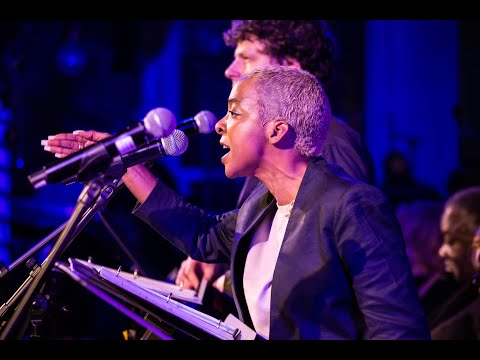 RacismAntigone in Savannah
Dramatic readings of Sophocles’ Antigone with live music to frame powerful dialogue about honoring the dead and healing historical wounds.