Open to Public
Hercules at Bucknell University
About the play
-
Madness of Hercules by Euripides
When the Greek hero Hercules returns to Thebes and finds his home occupied by a local tyrant, he goes on a rampage with his invincible bow, killing the men who have invaded his house and taken his family hostage. But in the heat of the battle, Hercules enters into a berserk rage and kills everyone in sight, including his wife and two young children, with his powerful weapon, mistaking them for enemies. When he comes back to his senses and takes in the horror of what he has done, Hercules contemplates suicide, but his close friend and fellow war veteran Theseus, stays by his side and offers unconditional support, encouraging him to share the burden of what he has done with his community. At its core, Euripides’ Madness of Hercules asks profound questions about how we should respond to unthinkable violence—as citizens, family members, friends, and neighbors—and how we can all work together to stop violence from occurring in our communities, before it’s too late.
Explore Projects
-
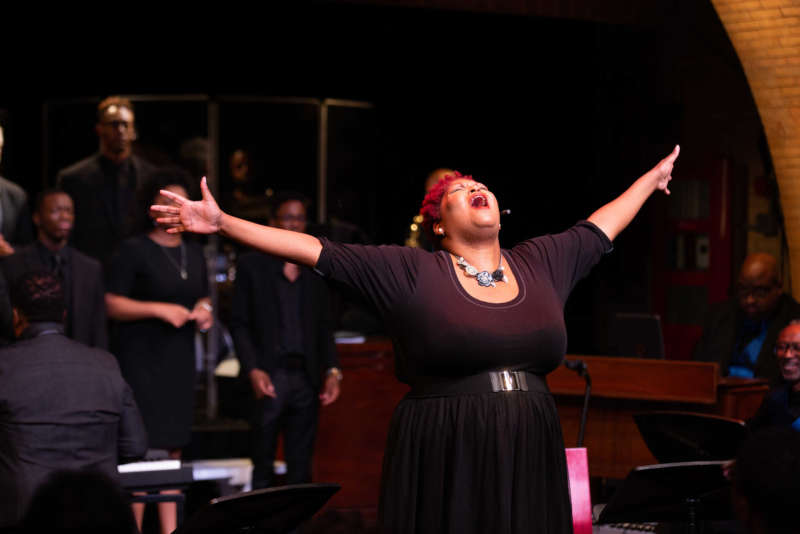 Racialized Police ViolenceAntigone in Ferguson
Antigone in Ferguson is a groundbreaking project that fuses dramatic readings by acclaimed actors of Sophocles’ Antigone with live choral music performed by a diverse choir, including activists, youth, teachers, police officers, and concerned citizens from St. Louis, Missouri and New York City, culminating in powerful, healing discussions about racialized violence, police brutality, systemic oppression, gender-based violence, health inequality, and social justice. Antigone in Ferguson was conceived in the wake of Michael Brown’s death in 2014, through a collaboration between Theater of War Productions and community members from Ferguson, MO, and premiered at Normandy High School, Michael Brown’s alma mater, in September of 2016.
-
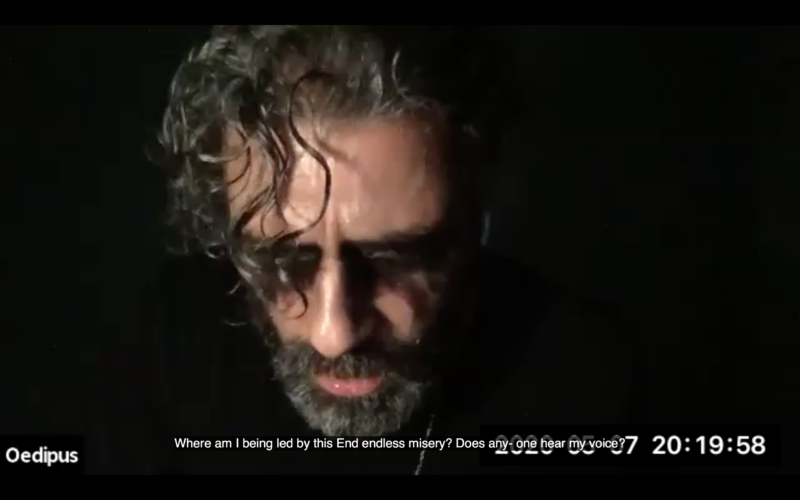 Pandemic & Climate CrisisThe Oedipus Project
The Oedipus Project presents acclaimed actors reading scenes from Sophocles’ Oedipus the King as a catalyst for powerful, constructive, global discussions about the climate crisis, ecological disaster, ethical leadership, and environmental justice. Sophocles’ ancient play, first performed in 429 BC, just after the first wave of a plague that killed nearly one-third of the Athenian population, is a story of arrogant leadership, ignored prophecy, intergenerational curses, and a pestilence and ecological collapse that ravages the archaic city of Thebes. Seen through this lens, Oedipus the King appears to have been a powerful tool for helping Athenians communalize trauma and loss, while interrogating their own complicit role in the suffering, not just of those around them but of generations to come.
-
 War & Mental HealthThe Tecmessa Project
The Tecmessa Project presents readings of Sophocles’s Ajax, an ancient play about the visible and invisible wounds of war, as the catalyst for discussions focusing on the unique challenges faced by military family members, including couples, children, caregivers, and communities. This project is designed to promote understanding, compassion, and positive action.